Mass Communications
Support for public alerting, emergency messaging, and communications infrastructure programs.
What We Handle on Communications Programs.
Alerting and communications systems only prove themselves under load, which means the work gets judged on whether it functions on the worst day of the year. Tower sites, dispatch centers, and public alerting platforms all have to be coordinated to a standard that holds when it counts.
Site Coordination
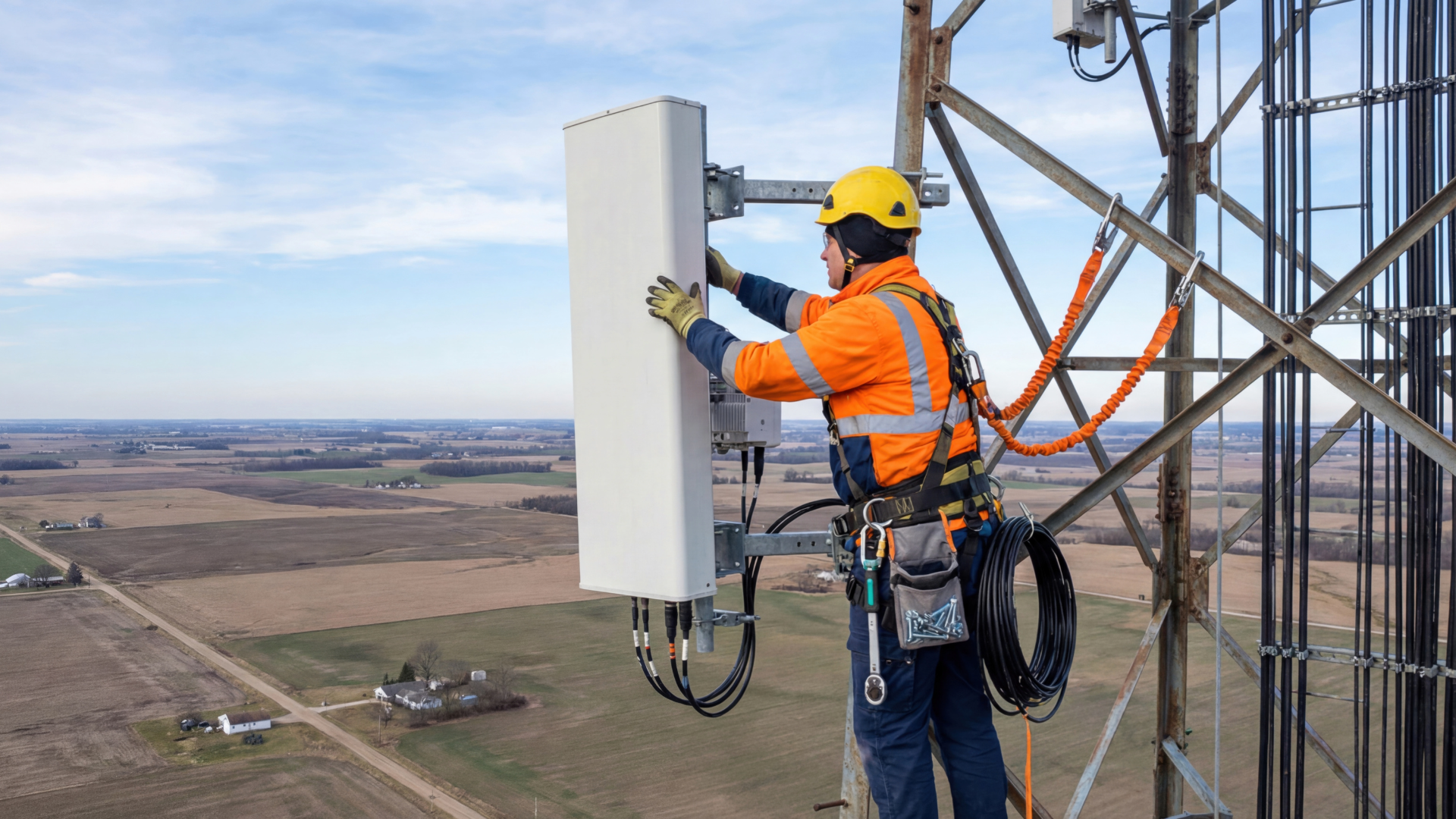
Field coordination for tower, antenna, and communications shelter work across dispersed sites.
Site Access Support
Coordination of landowner, tenant, and co location access arrangements at tower and rooftop sites.
Compliance Documentation
Assembly and tracking of permits, inspection records, and closeout packages.
Vendor Coordination
Scheduling across integrators, tower crews, and equipment carrying long lead times.
System Cutover Support
Coordination of phased transitions, user notifications, and continuity planning during system changes.
Documentation and Handover
Assembly of as built records, site drawings, and operating documentation for the owner.
From the Tower Site to the Dispatch Floor.
Alerting and public safety communications ride on physical infrastructure spread across a county. These are the assets that have to be standing and powered on the worst day of the year.
Communications Towers
Guyed and self supporting structures carrying the antennas everything depends on.
Antenna Systems
Mounted arrays, feedlines, and combining equipment tuned to the network.
Equipment Shelters and Cabinets
The conditioned enclosures protecting radios and electronics at each site.
Site Backup Power
Generators and fuel keeping remote sites alive through extended outages.
Microwave Backhaul Links
Point to point paths tying tower sites into a working network.
Underground Fiber Optic
Buried fiber routes carrying traffic between sites and centers.
Public Alert Sirens
Outdoor warning systems tested on schedules and trusted in emergencies.
Dispatch and 911 Centers
The consoles and rooms where calls become coordinated response.
Land Mobile Radio Systems
The voice networks first responders carry on their shoulders.
Emergency Callboxes
Fixed call points along trails, campuses, and corridors.
Alerting Displays and Signage
Digital signs pushing warnings into public spaces.
Grounding and Lightning Protection
The bonding systems that decide whether a strike is an event or an outage.
Built for Systems That Have to Work Under Load.
We come in alongside the districts, agencies, and integrators already responsible for these systems and take on the site access, scheduling, and documentation work.
Florida leans on alerting and public safety communications every hurricane season, and the systems have to be ready before the season opens rather than during it. We are based here and built for that pace.
- Emergency communications districts
- County and municipal public safety agencies
- Tower owners and co location operators
- Communications integrators and construction primes
- State emergency management agencies
- Utility and transportation owners running private networks
Three Ways to Bring Us Onto the Program.
Prime Contractor Teaming
Join your team on a communications pursuit as a named partner, with defined scope and a clear division of responsibility before award.
Subcontracting
Take a support scope under your prime contract and handle site access, permits, and cutover coordination across the network.
Direct Project Support
Contract with us directly as a district, agency, or owner for coordination and documentation support on a specific program.
Talk to Us About Your Communications Program.
Tell us about the project, the agency, or the teaming need. We respond quickly and come prepared.